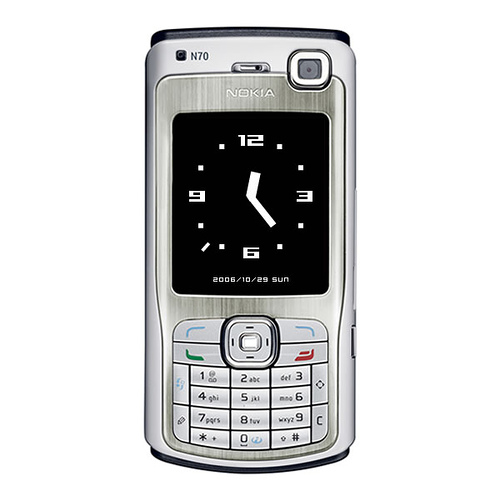
Mobile applications gets a lot of attention today. The market is growing every day. Cellular-News recently reported that this quarter’s worldwide smartphone sales increased 96% compared to a similar period last year, and that smartphones now account for nearly 20 percent of worldwide phone sales. Apps are admittedly a great way to reach out to new audiences.
But for non-profits, developing mobile apps can be a tricky undertaking. There’s a lot of hype around apps, and it’s hard to know how to approach the smartphone market. Planning for a mobile app that fits into a non-profit’s mobile communications strategy can make the difference between a great app and an app that doesn’t meet expectations. For non-profits wanting to develop apps, it’s important to make sure that they are meeting a real need – both for the organization and for users. Before launching an app, there are four questions non-profits should ask themselves:
Read More
Today's Mobile Minute brings you news about the six organizations that won social networking grants from infoDev, the way mobile advertising is used in Europe, the launch of 4G networks in Africa, accusations of rigging in India's bandwidth auctions, and a CGAP series that de-hypes mobile banking with actual data.
- InfoDev announced the winners of its social networking grants for organizations working in Africa and Asia. The winners were Akirachix (Kenya), MoMo Kampala (Uganda), COSTECH (Tanzania), Mobile Monday (Mozambique), CRC Topica (Vietnam), and Young Innovations Pvt. Ltd. (Nepal). The winners received $35,000 U.S. as part of the Creating Sustainable Businesses in the Knowledge Economy program.
Read More
The Mobile Minute is here to bring you coverage on the rise of smartphone sales around the world, a crop insurance plan in Kenya that uses mobiles to process claims and distribute money, the effect of the 2010 U.S. elections on PBS' mobile web and app usage rates, a pilot in Zambia that uses SMS to rapidly transmit HIV test results between rural clinics and hospitals, and mGive's new mobile donation options.
Read More
Today's Mobile Minute brings you coverage on an iPhone security hole, how mobile phones are used to transfer music in Mali, Facebook's continued mobile marketing strategy, and the Guardian's updated mobile web site.
Read More
Get ready for a month of mobile events with something for everyone! Interested in how ICTs can be used to help civil society organizations, or help manage crises? Or do you want to develop and monetize apps? This month, we've got you covered:
2 November, Global Pulse Tech Salon (New York City, USA): Interested in learning about how ICTs can be used during crises? The Global Pulse Tech Salon is hosting a gathering to focus on crisis management through data collection, citizen engagement, and the use of communications technologies.
2-4 November, Planet of the Apps (London, UK): This app-focused event is mainly for corporate brands and operators, with panels and presentations on building and marketing engaging apps.
Read More
Today's Mobile Minute brings you the latest mobile news. Mobile Commons helps people find voting stations in the U.S. via SMS, Nokia pushes for rural users, NPR's mobile services win them an Online Journalism Award, and seven out of ten people store sensitive data on their mobile phones – without security measures.
- Today is election day in the United States, so if you want to find out where your nearest polling station is, check out the Mobile Polling Place Locator by Mobile Commons. Text WHERE (for English instructions) or DONDE (for Spanish instructions) to 30644. You'll be prompted to enter your home address, and then be directed to your local polling center.
- The New York Times reported on Nokia's Ovi Life Tools program, which uses basic text messages to transmit market and agricultural data to rural mobile owners. The program has already been successful in India, and now Nokia is gearing up to launch a similar program in Nigeria.
- The BBC reported on a study from security firm Juniper Networks that found bad news for users worried about mobile security: "In its research covering 6,000 participants spread over 16 countries, Juniper found that 61% of all reported smartphone infections were spyware, capable of monitoring communication from the device. A further 17% were text message Trojans that charge fees to a device's account holder."
[Mobile Minute Disclaimer: The Mobile Minute is a quick round-up of interesting stories that have come across our RSS and Twitter feeds to keep you informed of the rapid pace of innovation. Read them and enjoy them, but know that we have not deeply investigated these news items. For more in-depth information about the ever-growing field of mobile tech for social change, check out our blog posts, white papers and research, how-tos, and case studies.
Image courtesy Flickr user QiFei
Read More
The Mobile Minute has info on social networking via mobiles, interactive mobile lesson plans in South Africa, a new ITU study that estimates more than 90% of the world's population has access to mobile networks, the Red Cross' work to battle a cholera outbreak in Haiti with SMS health updates, and the launch of a mobile money transfer pilot in the Philippines.
Read More
In today's Mobile Minute: The UN released a report on mobile penetration around the world and how mobiles can be used to fight poverty, Business Insider charted U.S. texting habits by age group, an Islamist group in Somalia banned mobile money transfers, Zimbabwe's first mobile money program prepares to launch, and the research group Akamai released data on the growth of the mobile web around the world.
Read More
Today's Mobile Minute brings you news about the continuous lack of Facebook privacy, the disagreement between IDC and Nokia on Nokia sales figures in India, a ranking of the top five free Android apps for journalists, a TNS study that found social media trumps e-mail as the most popular use for online mobile activity, and mapping indoor spaces with smartphone apps.
Read More
Since MobileActive.org was founded five years ago, this community has grown tremendously. We wanted to know from you - the insightful, smart, and innovative community - what’s been helpful, what you want and need, and what we should be doing more (or less) of.
With 5 billion mobile subscriptions worldwide and NGOs large and small adopting mobile tech in their work, and with governments jumping on board as well, this seems to be the year where we collectively broke through an adoption barrier.
In a quick word cloud of responses, mobiles, obviously, were the greatest topic of discussion, but "people," "work," "technology," "information," and "community" made strong showings as well. (We like that people was the second-most used word!)

Three Questions. Many Answers
Our first question focused on where we’ve been, asking: “What are the two most important changes that you have seen in the field of mobile tech for social impact over the last five years?”
Read More