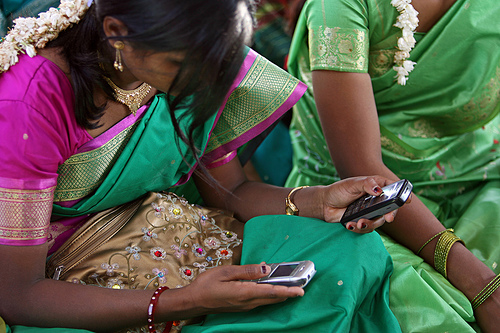
Instead of cracking open a book, try sitting back with a short story on your phone. CellStories, which launched in September, offers a new short (1500-2500 words) story every weekday to readers on mobile phones. The website only shows its daily short stories to visitors coming to the site on mobile phones – those on a desktop see a welcome page and are encouraged to come back on a web-enabled mobile.
Read More
Mobile phones are the tool of choice for a new group of young reporters in Africa. Voices of Africa Media Foundation, a Netherlands-based non-profit, trains young journalists in Africa to create news videos for the web using mobiles.
The foundation currently has programs in Kenya, Ghana, Cameroon, Tanzania, Mozambique, and South Africa, with plans to expand to more countries in 2010. The training program for the young journalists lasts nine months and teaches the trainees how to create video news reports with cell phones. At the beginning of the program, the small group (there are usually six or fewer participants per program) comes together and is trained for three to four days in the basics of mobile reporting (both how to use the technology and in basic journalism). Then they return to their communities, and for a period of six months, use the phones to make video reports on local stories.
Read More
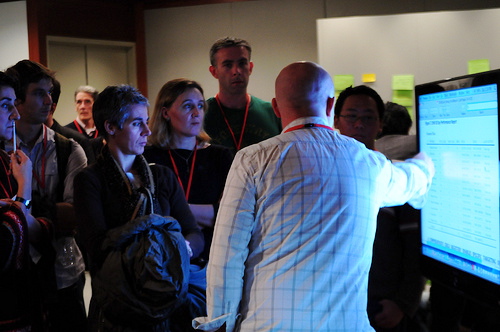
A few weeks ago, the Open Mobile Consortium and MobileActive.org hosted the first Open Mobile Camp. Discussions focused on open source mobile development and how mobile tools can and are being used in humanitarian work. Here are two profiles of interesting projects that were presented at the Camp.
Humanitarian FOSS Project: POSIT
The Humanitarian FOSS Project (H-FOSS) offers summer internships for undergraduate computing students who want to get involved in building free and open source software for humanitarian organizations. As part of H-FOSS, students from Trinity College designed a phone-based tool for search and rescue missions, scientific field-work, and other applications. Called POSIT (Portable Open Search and Information Tool), the application runs on the Android platform. In this video, H-FOSS project director Trishan de Lanerolle and Trinity College students Prasanna Gautam and Christopher Fei present POSIT.
Read More
After the hectic month of October where there were way too many events focused on mobiles for social impact, November is a bit more technically focused. To help you find your way in this fast-moving world, we’ve compiled a round-up of some key events that are taking place throughout the month of November.
DroidCon Nov. 2-4 (Berlin, Germany) DroidCon is the first Android business and developer conference in Germany. It covers everyting you want to know about the Open Handset Alliance mobile platform. Not focused on mobiles in social impact, but an indication that Android is starting to hop.
iPhone Developer Summit Nov. 2-4 (Santa Clara, CA, USA) Technical sessions explore web development opportunities on the iPhone, including building social applications and developing high-quality, iPhone-style web-based GUIs for applications.
Read More
On October 24th, 2009, more than 5200 events in 181 countries took place as part of a climate change awareness campaign. Planned by 350.org, this worldwide festival of events is a call to action.
In December, world leaders will meet in Copenhagen with one critical goal in mind: to create a global treaty to curb carbon emissions. 350.org wants to ensure that the treaty is tough enough to enforce the changes necessary to lower atmospheric carbon levels.
The 350.org name comes from the level of acceptable carbon dioxide –350 parts per million – that can exist in the atmosphere before effects of global warming begin to manifest. Currently, the carbon levels in the atmosphere are at 390 parts per million; 350.org believes that lowering the carbon emissions in the atmosphere to 350 parts per million can help undo some of the damage caused by global warming.
Read More
Mobile phones have been a boon to developing countries and to social development. Access to mobiles may indeed allow for better medical information, change the way farmers grow and sell crops, expand the way families interact, influence the way governments treat their citizens, and improve the way students learn in schools. But what is the real story behind these benefits? And who really gains from them? In our ongoing series on Mobile Myths and Realities: Deconstructing Mobile" we turn to how women are or are not benefitting from the ibiquity of mobile telephony. What did we find?
Read More
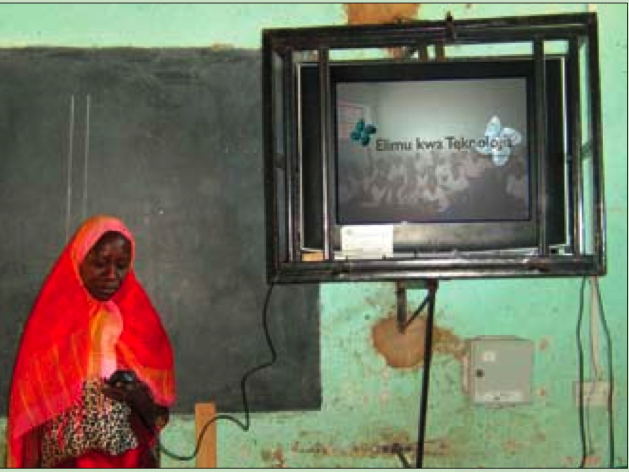
BridgeIT is a program that uses mobile phones to bring educational videos to rural classrooms - a mobile teaching tool deployed in The Philippines and Tanzania, is changing the way teachers and students interact.
The program develops videos in the subjects of math, science, and life skills, and provides schools with the technology necessary to use the videos in their classroom - everything from the mobile phones that receive the videos to the televisions that play them. Teacher training and lesson plans that promote the integration of the educational videos into regular classroom activities are also provided.
Read More