Targeting women with mobile phones and mobile-based projects can bring great benefits and opportunities, as we outlined in Part 1 of our series on women and mobiles. But, there is a “darker side” to this world, which includes changes in gender relations and power dynamic, a potential increase in violence, substitution of money or a change in expenditures, invasion of privacy, and increased control by a male partner.
Changes in Gender Relations and Power Dynamics
When the traditional social dynamic of a household is patriarchal, introducing a mobile phone into the hands of the woman can challenge the existing gender structure. Trina DasGupta, mWomen Programme Director for the GSMA Development Fund, writes in an e-mail to MobileActive.org, “threats to the status quo have sometimes been viewed negatively by community leaders and we have seen examples of this gender discrimination manifesting itself when women gain greater access to empowering tools, such as the Internet or mobile phones.”
Women themselves may not agree. The GRACE project study in Kenya, for example, finds that women do not perceive mobiles at tools for males. “Unlike our literature review that suggested that the mobile phone is culturally construed as a male tool, the women entrepreneurs did not perceive the phone as such. However, the study does indicate that usage of the phone is culturally construed, with an increase in responsibilities and empowerment for one or other profession socially construed as women’s work.”
A paper by Aramanzan Madanda looks at gender relations and ICT adoption in Uganda (the work will soon be published in book format) and finds that “existing gender structures have been dented and that patriarchy is stressed by adoption of the technologies especially mobile phones leading to transformation of gender relations to an extent.”
Many medications lose efficacy if stored outside their optimal temperature range, but in rural settings it can be difficult to maintain a steady cooling level. A new solar-powered refrigeration device called CoolComply is working to solve this problem by creating a more stable means of home medication storage, and improving patient adherence along the way.
Developed in partnership by the Massachusetts General Hospital, Innovations in International Health at MIT, and the Global Health Committee, CoolComply uses wireless technology to relay readings to local healthcare workers so they can remotely monitor patients being treated for Multiple Drug Resistant Tuberculosis (MDR-TB).
MobileActive.org spoke with Stephan Boyer (a student of Electrical Engineering and Computer Science at MIT), Anna Young (the R&D Officer for International Laboratories of Innovations in International Health at MIT), and Aya Caldwell (Program Manager at CIMIT’s Global Health Initiative) about their work developing CoolComply.
To create a system that keeps medications cool and that monitors the medications' temperatures
To monitor medication adherence of patients with multiple drug resistant tuberculosis
Brief description of the project:
CoolComply is a cooling device that monitors the temperature of MDR-TB medication and wirelessly transmits data about the temperature of the medication and patient adherence levels to community health workers through SMS.
Target audience:
The target audiences are community health workers in Ethiopia and patients with multiple drug resistant tuberculosis.
Length of Project (in months) :
18
Status:
Under Development
Anticipated launch date:
2011 Aug 1
What worked well? :
The project is still under development, but so far the group has built and tested a cooling device that transmits SMS alerts.
What did not work? What were the challenges?:
The group has worked around designing for limited connectivity and limited electricity access, as the device needs to function off the grid while maintaining steady temperatures and regular wireless updates for commuity health workers.
Activists, rights defenders, and journalists use mobile devices for reporting, organizing, mobilizing, and documenting. We have written about many of these uses for years now, describing how mobile phones provide countless benefits to activists and rights defenders. Mobile tech is relatively low cost and allows for increased efficiencies and vast reach, for example. But, there is a darker side.
Mobile Phones present specific risks to rights defenders, journalists, and activists. We believe that is is critically important to know that mobile communication is inherently insecure and exposes rights defenders and those working in sensitive environment to risks that are not easy to detect or overcome. (We provide an overview of those risks in this Primer, for instance)
To address mobile safety and security for rights defenders, we are introducing SaferMobile, to help activists, human rights defenders, and journalists assess the mobile communications risks that they are facing, and then use appropriate mitigation techniques to increase their ability to organize, report, and work more safely.
What is SaferMobile?
Online and offline educational and tactical resources (risk evaluation tools, case studies, how-to guides, security tool reviews);
Trainings and curricula for use in various countries and with different constituencies;
Specific mobile security software focused on the needs of rights defenders, activists, and journalists.
As will all that we do, we believe that there certain values and principles that are paramount in this work. For SaferMobile, we are following these principles:
We believe that skilled, trained, and knowledgeable activists, journalists, and rights defenders are key to democratic changes. We also believe that the smart and effective use of technology constitutes an integral piece of their skill set.
The better activists, journalists, and rights defender are able to work, the more safely they are able to organize and communicate, the more likely it is that their work is effective and heard.
We are committed to accessible, useful, actionable, and technically accurate and secure content, materials, and software.
We are also committed to describing technological vulnerabilities in terms that non-technical users can easily understand.
We work with activists on the ground to ensure that the content we produce addresses real uses and risks.
We also seek responsive connections between activists and security professionals so that both are more able to assess and respond to changing risks.
Lastly, we are maintaining information that reflects current security risks and technological vulnerabilities and is vetted for security and technological accuracy by knowledgeable experts.
Roadmap and Process
The SaferMobile project is just beginning its second Phase. Phase 1 included needs assessment with users and peers – activists, rights defenders, journalists, technologists, security experts, and mobile developers. Through this research, we outlined plans for web content, training curriculum and tools (software) and are now creating these pieces in Phase 2 of the project (May-August 2011).
A team of scientists, animators, and educators are working together to create animated videos that can be sent and downloaded to mobile phones around the world. The animations can be done in any language, are targeted toward low-level literate learners, and convey methods to obtain safe water in Haiti or techniques to farm effectively in Africa, and concepts such as value in a marketplace exchange.
This University of Illinois project is called "Scientific Animation Without Borders", or SAWBO, for short. The project started about a year ago. As the team delivers the animations via mobile phone and other mechanisms, they also hope to deliver a more collaborative and bottom-up approach toward effective educational materials.
MobileActive.org spoke with university faculty and graduate students to hear more about animation, education, and mobile technology.
Short-term goal: Working with educators to help them to demonstrate teaching concepts using visual aids. A longer-term goal is to develop a library of animations with easier access to a wide audience.
Brief description of the project:
A team of scientists, animators, and educators are working together to create animated videos that can be sent and downloaded to mobile phones around the world. The animations can be done in any language and are targeted toward low-level literate learners.
Target audience:
The target audience is low-level literate learners.
Status:
Ongoing
Anticipated launch date:
What worked well? :
Animation is a cost-effective approach to creating multiple language versions of content. The team is able to tap into a volunteer network of translators at the university. The online library allows for peer review of the concepts and content.
What did not work? What were the challenges?:
One challenge is that for mobile delivery, access is dependent on bluetooth technology and video-enabled phones.
D-Lab is a program at the Massachusetts Institute of Technology (MIT) that focuses on the use of technology and sustainable solutions for international development, especially for low-income households.
A village in India last year banned unmarried women from using mobile phones for fear they would arrange forbidden marriages. The village council suspected young men and women were secretly calling one another to arrange to elope. Meanwhile, unmarried men could use mobile phones under parental supervision.
As mobile penetration increases across the developing world, the entry of mobile phones in the hands of women causes reactions. In many cases, mobile phone ownership empowers women in myriad ways: economic gains, increased access to information, greater autonomy and social empowerment, and a greater sense of security and safety.
But, there is a darker side. Targeting women with mobile phones can cause changes in gender dynamics and family expenditures and may relate to increases in domestic violence, invasion of privacy, or control by a male partner.
mPowering is a nonprofit organization that is pioneering the use of mobile technology to empower the world’s poor—those living on less than $2 a day—to break free of the multigenerational cycle of poverty.
Activists, rights defenders, and journalists use mobile devices and communications for reporting, organizing, mobilizing, and documenting. Mobiles provide countless benefits -- relatively low cost, increased efficiencies, vast reach -- but they also present specific risks to rights defenders and activists.
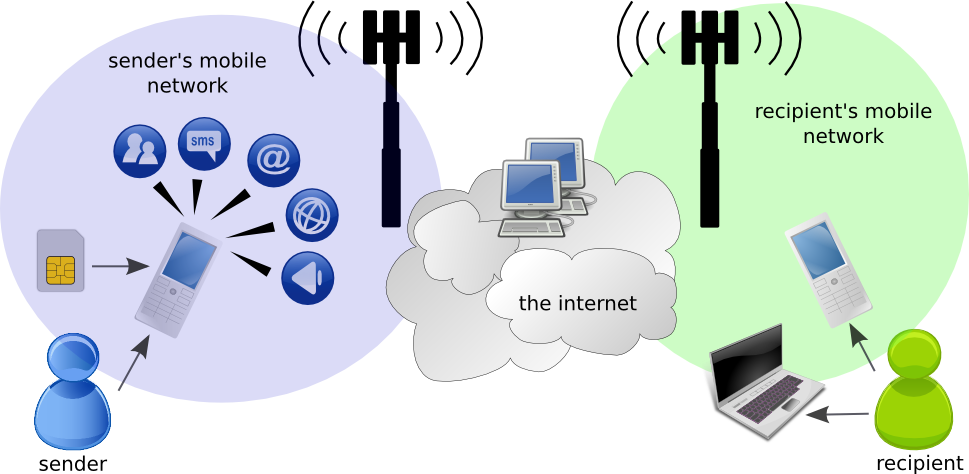
Additionally, information about other mobile uses, such as your photos or video, your data, the Internet sites you visit from your phone, and your physical location, are stored on your device and often logged by your mobile network. (The above graphic shows a schematic overview of the layers of the mobile networks to give you sense of the different elements that make up communications between two phones.)How much is this putting you at risk? This Overview will help you evaluate your level of risk in regard to your mobile communications.
Apple’s release of version 4.3.3 of its iOS operating system “..kills iPhone tracking”, according to a recent article. After nearly three weeks of public attention on this issue, this news will perhaps appease some iPhone fans but is not likely to end the debate over what users should know and control about their smartphones’ location tracking abilities. Like Apple, Google’s Android and Microsoft’s Windows Phone systems have also recently come under fire, though important differences exist in the way each company collects and uses location-based information.
We have reviewed recent articles and research on each of these mobile operating systems’ location tracking capabilities and will describe the various claims made and the research undertaken to test these claims.
In our ongoing and ever-expanding series of how-to resources for NGOs and grassroots organizations using mobile technology in their work, we are releasing a new primer on "Mobile Surveillance." Our reviewer, Melissa Loudon, gives an overview of mobile surveillance risks and tips and tools on how to prevent surveillance for secure communications.