When it comes to water, every drop counts. When a local waterpoint malfunctions or dries up, it’s important to get the problem resolved as quickly as possible. That’s where Maji Matone, a water monitoring and civic participation project in Tanzania, comes in.
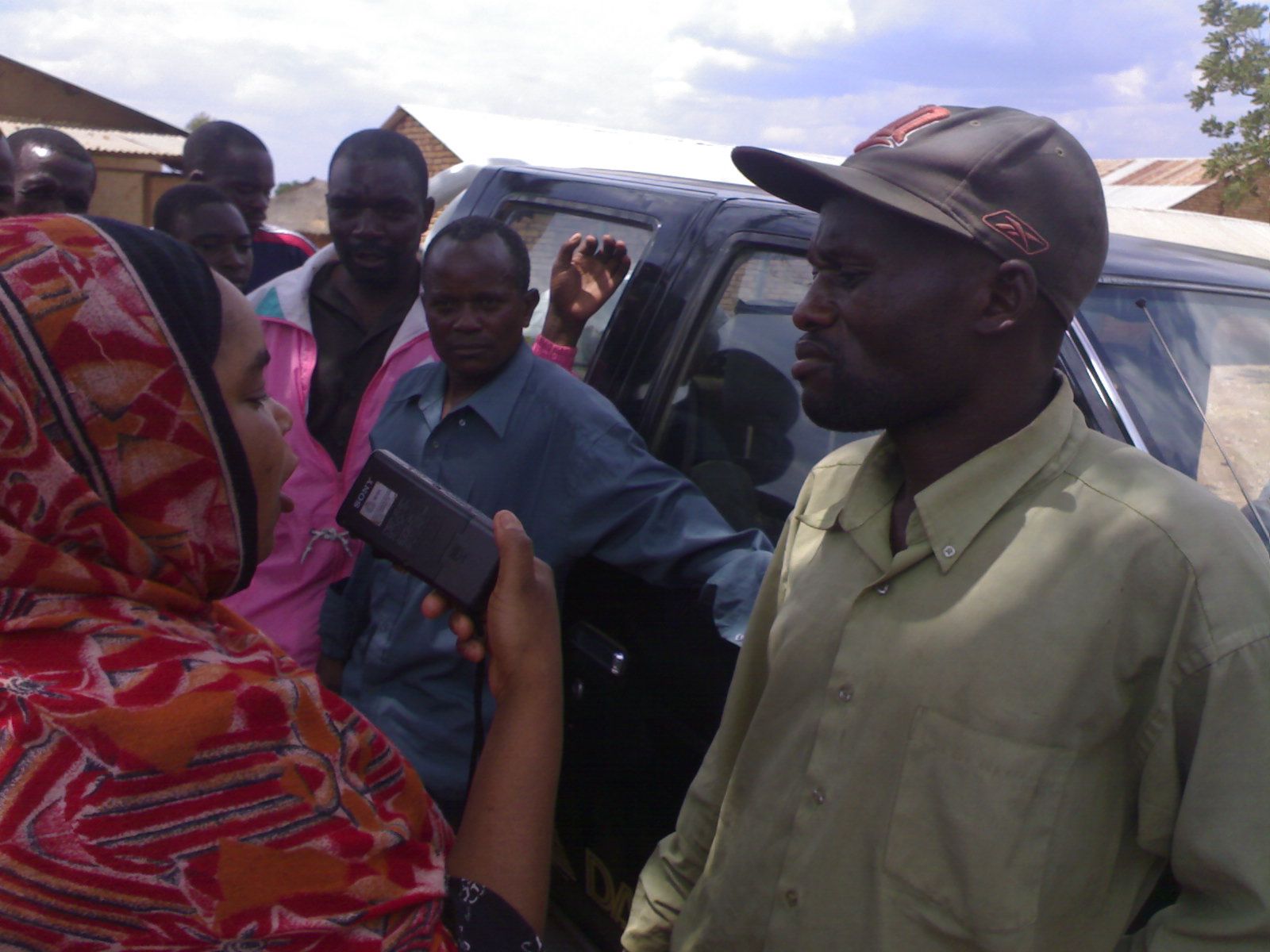
Run by Daraja, a Tanzania-based NGO, Maji Matone asks villagers to report outages in their water systems via SMS. Daraja employees read through the SMSs, then pass along the information to the local district engineer. The project is currently being piloted in three different districts. Each district has a local engineer responsible for the water infrastructure. If reports continue to come in and no action has been taken, Maji Matone turns to its media partners in order to publicize the lack of action.
According to the Wall Street Journal, “[Data produced by the use of mobile phones] generates immense commercial databases that reveal the ways we arrange ourselves into networks of power, money, love and trust.” As mobile phone use increases and applications become increasingly sophisticated, the volume of mobile data we create continues to grow at an incredible rate, creating new possibilities and posing new challenges to notions of privacy.
Businesses want this data for marketing. Congress wants to regulate it. Activists and privacy advocates want to ensure that it is not used to compromise their safety or freedoms. Meanwhile, projects such as UN Global Pulse want to use information gleaned from mobile phone use to detect and prevent slow-onset humanitarian crises. We invite you to join us on the evening of June 30th for our next New York City-based Mobile Tech Salon as we explore these tough questions:
How do we determine socially beneficial uses for mobile data?
How can the safety, security, and privacy of individuals be respected while using mobile data to benefit them?
How can our mobile data be effectively aggregated and anonymized? Or can’t it?
It is an unfortunate irony that often the poorest people pay the most for the lowest quality energy. In many areas, the rural poor pay as much as 5 USD per month for kerosene or battery power. SharedSolar is a project that attempts to develop the technology, and business case to connect these populations to better, more traditional energy sources. It does so by leveraging existing mobile networks.
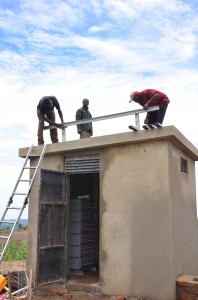
With SharedSolar, rural poor consumers make payments based on their usage by using a scratch card and adding credit via SMS. The system uses a micro-grid network to connect consumers to power, and each household uses a unique prepaid metering system. A group of up to 20 consumers (individuals, households, small businesses, or schools) are all located within a 50 meter radius of a single, central power source -- such as solar panels -- connected via an underground wire.
At the same time, the SharedSolar team is testing and developing its business model to show that a case exists for micro-grids and mobile energy payment. The team launched an initial pilot in 2010 in Pelengana, Mali and currently has systems set up in Uganda and Tanzania.
MobileActive.org spoke with Matt Basinger, project lead for SharedSolar, to learn more about the overlap of mobile technology and rural power.
With SharedSolar, rural electricity consumers make payments based on usage by using a scratch card and adding credit via SMS. The system uses a micro-grid network to connect power to consumers, and each household uses a unique prepaid metering system. A group of up to 20 consumers (individuals, households, small businesses, or schools) are all located within a 50 meter radius of a single, central power source -- such as solar panels, all connected via an underground wire.
The SharedSolar team is testing and developing its business model to show that a case exists for micro-grids and mobile energy payment. The team launched an initial pilot in 2010 in Pelengana, Mali and currently has systems set up in Uganda and Tanzania.
Brief description of the project:
Unfortunately, the poorest people pay the most for the lowest quality energy. In many areas, the rural poor pay as much as 5 USD per month for kerosene or battery power. SharedSolar is a project that attempts to develop the technology, and business case, to connect these populations to better and affordable energy sources. It does so by leveraging existing mobile networks.
Target audience:
Up to 20 micro-grid consumers are located within a 50 meter radius of a single central power source. SharedSolar launched an initial pilot in 2010 in Pelengana, Mali and currently has systems set up in Uganda and Tanzania.
Status:
Ongoing
Anticipated launch date:
What worked well? :
SharedSolar leverages existing mobile infrastructure in a given area. The SharedSolar technology is a near-term, entry-level approach: the application runs on a local server, in-country, with an attached modem (a local SMS device). It can be run on a basic netbook. SharedSolar is a modular system, so the team can add solar generation capacity or deploy additional systems as demand for electricity increases.
What did not work? What were the challenges?:
When selecting a site to place the system, there are often land rights or land access issues. And although it hasn’t been an issue yet, the team is aware of the possibility of tampering. For instance, a neighbor could dig up someone else’s wire.
Another challenge for SharedSolar comes with trying to develop the business model alongside the technology. In addition to reducing costs and improving livelihood for the rural consumers, SharedSolar has a goal to test a business model for micro-utility power
In 2008, Bruce Girard concluded in a MobileActive.org guest post that the addition of text messaging technology into the community radio toolkit was still in its infancy. SMS use at radio stations was informal, he wrote, and the few cases of more complex use of SMS messages accompanied political crisis or natural disaster and were largely donor financed.
Two years later, we delve once again into the state of SMS and mobile technology at community radio stations, by way of an informal survey. While advances have been made and creative projects have emerged, integration remains an ad-hoc and individual enterprise.
This report summarizes existing projects and success stories, highlighting the most popular uses of mobile technology. It concludes with a discussion of the challenges that community radio stations face in adopting SMS and mobile technology.
You are an activist, rights defender, or journalist. You use a mobile device. And you work in sometimes risky situations in your country. This guide will help you implement mobile security practices in your work. It will help you assess the particular risks that face you and then assist you in developing a plan to mitigate those risks.
You are an activist, rights defender, or journalist. You use a mobile device. And you work in sometimes risky situations in your country.
This guide will help you implement mobile security practices in your work. It will help you assess the particular risks that face you and then assist you in developing a plan to mitigate those risks.
We have previously published a Mobile Risk Primer that describes general security vulnerabilities associated with mobile technology and communication. Read it!
Throughout this guide, we'll also highlight the fictitious case of Asima, a blogger and activist in Egypt. Examples of how Asima might complete the assessment worksheet and create a security plan for her work are highlighted in this guide.
We've heard much recently about information that is being tracked by mobile phone companies (see our recent post) and app developers. However, there are more overt security threats that are potentially more dangerous.
One of these threats is referred to as either a “roving bug” or a “remote listening” application. It is essentially the same concept as a conventional audio bug, except that it requires no hardware other than a smartphone. Once installed, remote listening software enables a 3rd party to call a phone, activate its speakerphone capabilities, and secretly transmit any sounds picked by its microphone to another phone number, where it can be monitored and recorded.
Armed with a few Kodak Zi8 cameras, 6 HTC Wildfire mobile phones, energy, expertise in training citizen journalists, Small World News is working to share stories from Libya with the larger world.
Small World News is on the ground in Benghazi training Libyans to capture and tell video stories of events in this volatile region. Along the way, the team has also captured footage that no other main stream media outlet has been able to get. MobileActive.org chatted late last night with Brian Conley, founder of Small World News, to hear how things were going. What we learned is that capturing and sharing stories from Libya is as much about technology as it is about establishing trust and connections with the journalists on the ground.
The goal is to build an effective and sustainable conduit for content produced by citizens about daily life in Libya that reaches a wider audience.
Brief description of the project:
Small World News is on the ground in Benghazi training Libyans to capture and tell video stories of events in this volatile region.
Target audience:
Small World News has a team of about a dozen men and women ranging in age from 16 to 30 years learning how to create video content.
Status:
Ongoing
Anticipated launch date:
What worked well? :
For Small World News, capturing and sharing stories from Libya is as much about technology as it is about establishing trust and connections with the journalists on the ground. The team used platforms like Speak2Tweet and Unviersal Subtitles and also tapped into existing networks of people on the ground.
What did not work? What were the challenges?:
Establishing trust and working in a stressful environment have been ongoing issues. Also, there have been technical challenges. The account for the team’s satellite equipment had not been activated, and they found out that credit had never been applied to it.

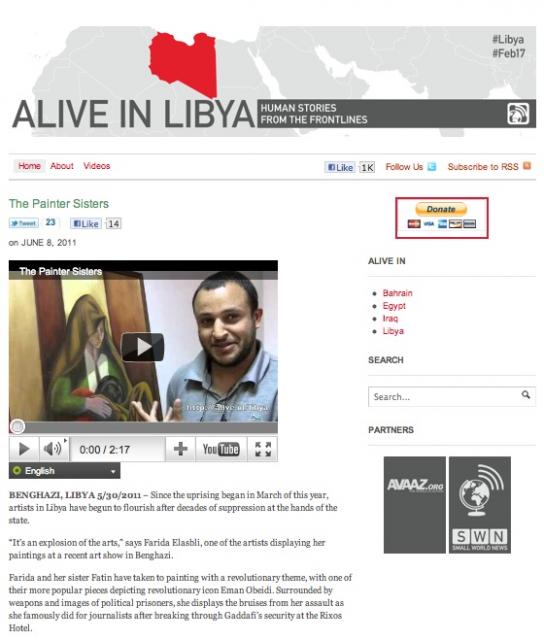 Armed with a few Kodak Zi8 cameras, 6 HTC Wildfire mobile phones, energy, expertise in training citizen journalists,


