We had another great Technology Salon today, this time on Cloud-based SMS applications that showcased four interesting applications -- ChildCount+, Jokko, Happy Pill, and Patatat. And, in big news of the day, Matt Berg succeeded in breaking the Tech Salon cardinal rule of no slideshow presentations (and I am making it public knowledge in case someone needs ammunition in the future).
The rapid adoption of mobile technology by end users has also resulted in a corresponding proliferation of pilot projects around the world. A number of projects discussed in this Salon have cross-over potentials not just across borders, but even across sectors. Here are some notes and links to applications, all in the interest of wider dissemination beyond the group that was at the Salon.
This guest-post is by Arturo Morosoff who completed recently a project with D-Tree International and BRAC Tanzania to provide videos on mobile phones to assist Community Health Workers (CHWs) for health education. It is posted here with permission.
I recently completed a five week volunteer project working with Irene Joseph and Gayo Mhila of D-Tree International to provide videos on mobile phones to Community Health Volunteers with BRAC Tanzania in the Mbagala district of Dar Es Salaam.
A bit about me: I have no formal training in ICT or public health. My background is in technology and business and I live and work in the San Francisco Bay Area in California. I was on a two month trip in Tanzania and volunteered to help D-Tree with this project. As such, the project needed to be completed in a short time and we began with modest goals.
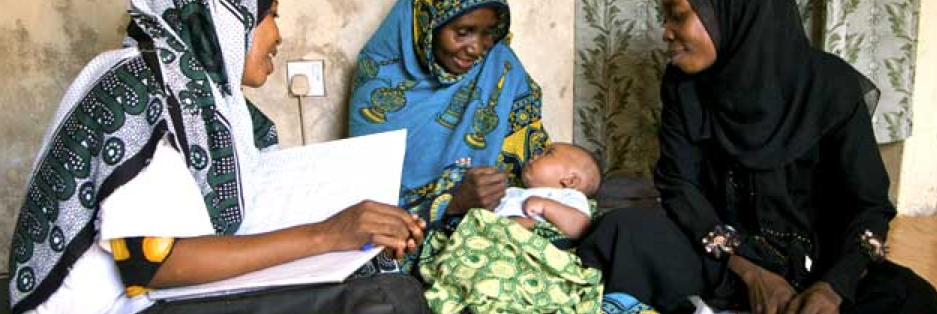
Among BRAC’s programs to help alleviate poverty is its health program, which relies on an all-female team of Community Health Volunteers (CHVs) to conduct monthly home visits to provide health education and support. Each CHV visits 150 – 200 homes each month, asking health related questions and providing healthcare information. In Tanzania, D-Tree has been collaborating with BRAC to provide the CHVs with a mobile phone-based tool called Commcare, to help improve the effectiveness of their home-based programs. About a year ago there was discussion with the CHVs of providing them with health education videos suitable for use on phones to provide additional support for their home visits.
June is exploding with events focused on mobiles for social change. Look at some of the places where the movers and shakers in the 'mobile world for good' will be gathering:
2 June, New York City, New York, USA: Personal Democracy Forum will host Mobilize Your Cause: A Bootcamp. The half-day event will provide insight into developing an effective mobile campaign, how to build an activist community, and new technologies that are making it easier to use mobiles for social causes. The event is followed by Personal Democracy Forum's two-day conference, (3-4 June) which will focus on exploring technology's impact on technology and government. MobileActive.org will host the mobile portion of the bootcamp.
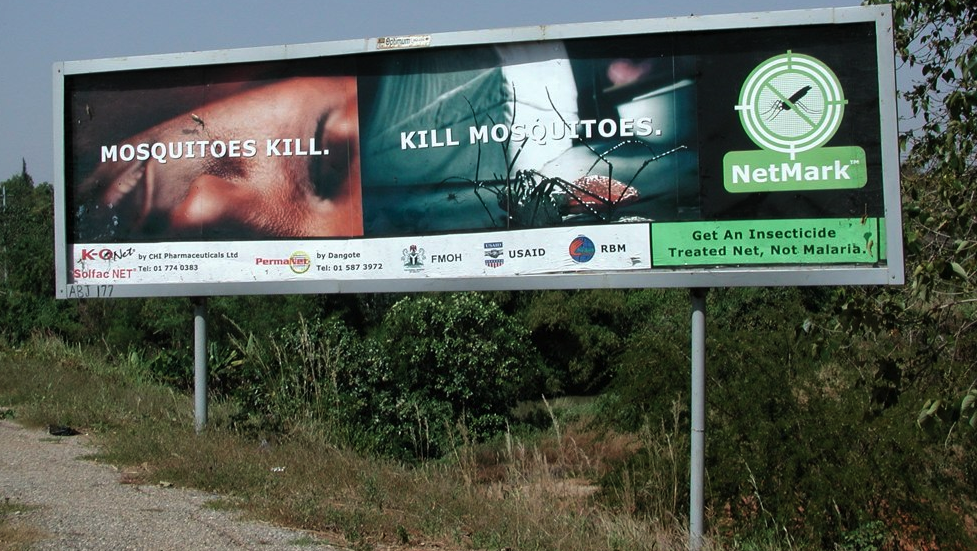
The human and economic cost of malaria in Nigeria is staggering. There are currently 110 million clinically diagnosed cases in a population of 151 million. Malaria kills 250,000 children under five years old in Nigeria every year, and is the cause of 11% of maternal deaths. 60% of out-patient visits and 30% of hospitalizations in the country are malaria-related.
In addition to the enormous toll malaria takes on public health, it is also expensive. 132 billion Naira (USD $870 million) is lost every year in the form of malaria prevention and treatment costs and from the loss of overall economic productivity. And yet in spite of the risk malaria poses to the Nigerian people, health surveys from 2006 to 2008 indicated that only 8% of households in the country owned at least one insecticide-treated net (So-called ITNs).
Comprised of data from 17 articles representing 12 studies (five of which focused on disease prevention and seven of which focused on disease management), the authors draw conclusions on the effectiveness of using mobile phones (and more specifically, text messaging on mobile phones) to change health behaviors.
As we are completing an inventory of mobile date collection projects around the world that are focused on vulnerable populations and early warning, we've come across a few efforts that are worth highlighting. One is the SMS and PDA-based surveying of the World Food Programme (WFP). WFP's food security monitoring systems are set up in many countries. While some countries are still submitting paper records, there is a push to incorporate PDAs or SMS data transmission for faster and more reliable monitoring of food security.
The data collected includes both food security baseline data and food insecurity indicators. The bulk of WFP's data collected focuses on nutritional indicators, market prices, import, cross border trades, socioeconomic indicators, and health indicators. The UN agency is trialing both FrontlineSMS and RapidSMS, two mobile data collection software tools, in its current projects, as well as PDAs but is likely going to standardize its operations using one of the two with some custom gateway software.
In the process of collecting data, WFP always collaborates with governments and other UN partners. WFP staff are involved with the supervision, training and coordination but but the people who conduct interviews and collect the data are usually government staff, university students, or NGO workers As one WFP staffer noted, "We have huge armies of data collectors."
The scope of the work is accordingly large. Some of the efforts cover an entire country. In Senegal, for example, WFP has 250 numerators covering the country – 22 teams of 11 people each who are collecting data for six weeks, visiting 2,000 villages.
The video below features George Muammar of the WFP Vulnerability Analysis and Mapping Unit. He describes rapid data collection in an Emergency Food Security Assessment in Goma, N. Kivu, Democratic Republic of Congo.
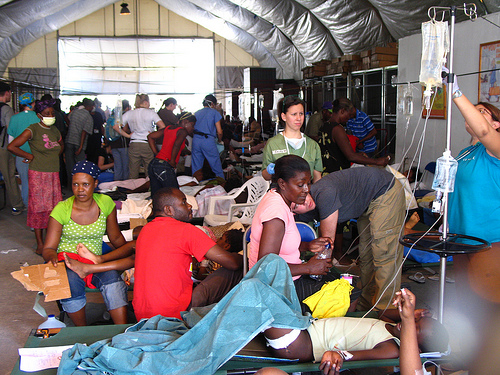
In the days following the devastating earthquake in Haiti in early January 2010, aid workers arrived on the island to offer medical and technical support. With the capital, Port-au-Prince, suffering the brunt of the destruction, transporting supplies and people over destroyed roads proved difficult. Communications technologies, in an immediate post-disaster environment, are critical for aid workers to coordinate relief supplies and to deliver post-disaster care.
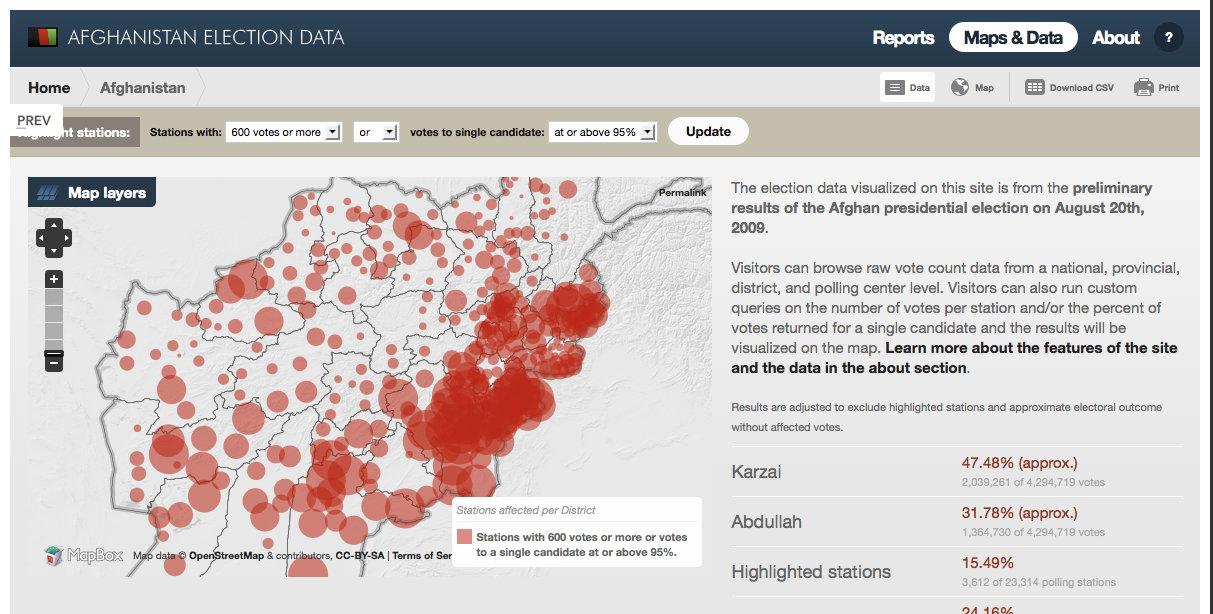
Mapping incidences via SMS has been in the news lately. From the swine flu to requests for assistance to election data, visualization of data submitted and collected with mobile phones and via other channels is a hot topic. We asked our special contributor, Melissa Loudon to compare two platforms: Ushahidi and Managing News. While different, both offer powerful capabilities for mapping reports, news of incidences, and SMS-submitted data.
In this "How-To," we describe the installation process, SMS integration, and the mapping functionality of both platforms. If you have deployed either one of the platforms or have others to add for future reviews, please leave a comment! The full "How-To" article can be found here.
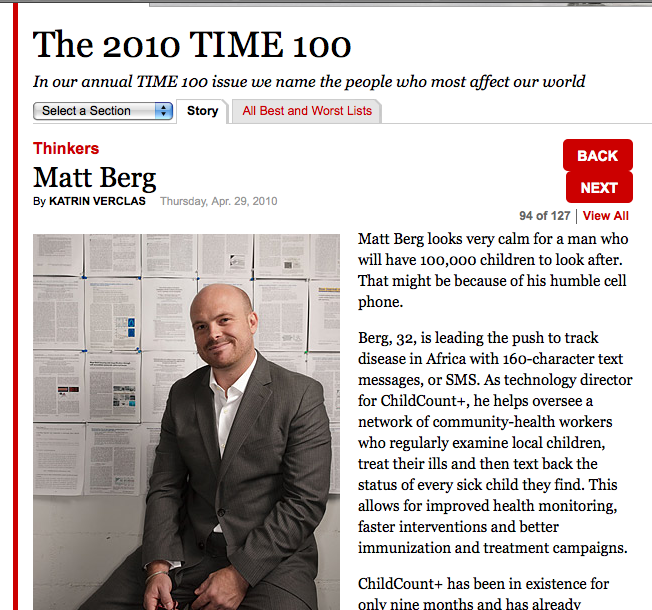
Matt is a director at the Earth Institute at Columbia University responsible for the design and implementation of technology for the Millennium Villages Project, a project working with communities in 10 sub-Saharan Africa countries to accelerate progress towards the Millennium Development goals.
During the last FailFaire (well, actually the first one to date) we were reminded by a guest rather sternly that NGOs often forget who their users are and, more importantly, what the needs of these users are. When we, collectively as a field, implement mobile deployments with constituents or groups, do we tend to forget user needs and capabilities, getting too enchanted with the tech (and ourselves) and then fail when, not surprisingly, there isn't any uptake? We have seen many a project fail for precisely this reason. Our grouchy attendee had a point even if he did not deliver it very gracefully.
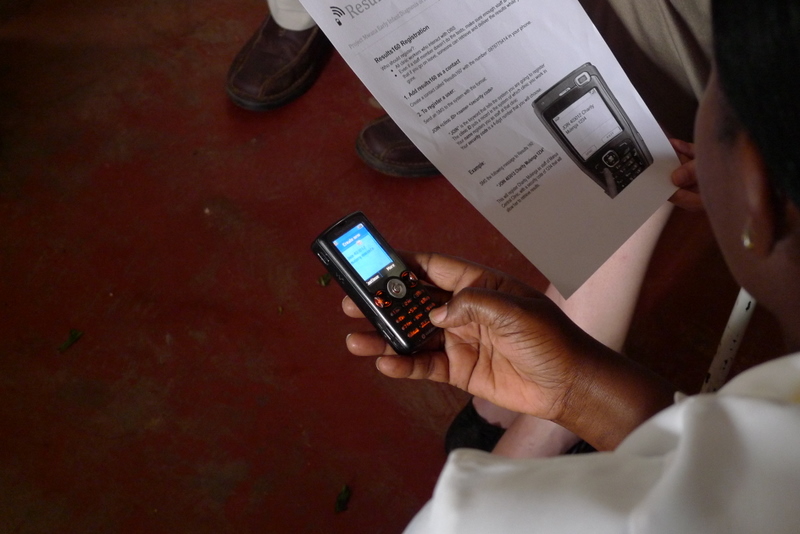
To this end, we are reposting here a recent report from Zambia. Project Mwana is UNICEF Innovation project that is "working with the Zambian Ministry of Health, UNICEF Zambia, the Malawi Ministry of Health, UNICEF Malawi and many implementing and technical partners to find appropriate, scalable and impactful ways that mobile technologies can strengthen health services for mothers and infants in rural health clinics."